Why Matcha Loses Its Bright Green Color and Flavor So Fast Once Opened
Quick Answer: Matcha’s vivid color and fresh flavor come from chlorophyll and delicate volatile compounds that degrade quickly on contact with oxygen, light, heat, and moisture — once a tin is opened, exposure during each scoop accelerates that breakdown, which is why airtight storage, minimal light exposure, refrigeration, and quick scooping matter far more for matcha than for most other pantry ingredients.
The same matcha that tasted vibrant and slightly sweet in week one can taste dull, hay-like, and faintly bitter by week three, and the tin itself is usually the reason why.
What’s actually causing the color to fade from bright green to dull olive?
Matcha’s color comes from chlorophyll, a pigment that is notably unstable once exposed to oxygen, light, and heat. Each time the tin is opened, a fresh pulse of oxygen reaches the powder, and repeated exposure gradually breaks chlorophyll down into duller, browner pigment compounds — this is the same basic process that turns fresh herbs and vegetables from bright green to olive-drab over time.
Why does the flavor specifically change, not just the color?
Matcha’s fresh, slightly sweet, umami-forward flavor depends heavily on delicate volatile aromatic compounds and amino acids like L-theanine, both of which degrade faster than the more stable bitter catechin compounds. As the delicate flavor notes fade first, the remaining flavor profile skews increasingly toward flat and bitter, which is why old matcha doesn’t just taste weaker — it tastes different, and worse, in a specific direction.
Does light exposure really make a measurable difference here?
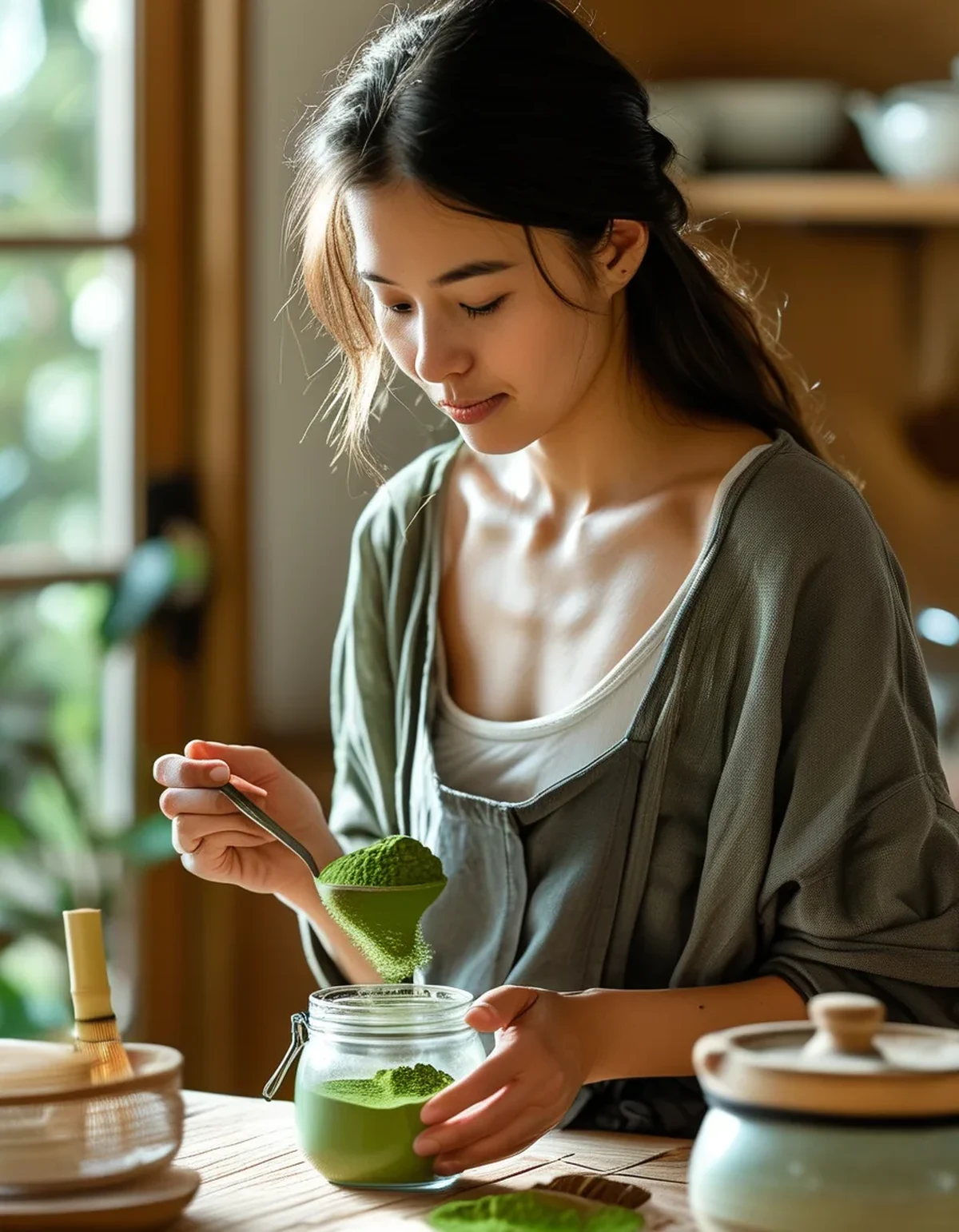
Yes — chlorophyll degradation accelerates significantly under light exposure, which is exactly why high-quality matcha ships in opaque, light-blocking tins rather than clear glass jars. Storing an opened tin somewhere bright, like on an open counter near a window, meaningfully speeds up the color and flavor fade compared to a dark pantry or cabinet.

What’s the single most effective storage change to slow this process down?
Refrigeration in an airtight container is the most effective single change, since cold significantly slows the oxidation reactions responsible for both color and flavor loss. Matcha should be brought to room temperature before opening after refrigeration, since condensation forming inside a cold tin introduces moisture that causes its own separate degradation and clumping problems.
5 Mistakes That Speed Up Matcha’s Fade
1. Leaving the tin open while scooping and chatting — every extra second of air exposure adds up over dozens of uses. 2. Storing it near the stove or a sunny window — heat and light are the two fastest degradation triggers. 3. Scooping with a wet spoon — introduced moisture accelerates clumping and staleness. 4. Buying in bulk without a real usage plan — matcha bought weeks ahead of need starts degrading before it’s even opened regularly. 5. Skipping refrigeration after opening — room-temperature storage alone lets oxidation run at full speed.
FAQ: Matcha Storage and Freshness, Answered
How long does opened matcha actually stay good?
Most ceremonial-grade matcha holds decent quality for about 4-6 weeks after opening with good storage, and noticeably declines beyond that even when stored well.
Is it worth buying smaller tins more often instead of one large tin?
Yes, for most home users — a smaller tin finished within a few weeks preserves quality far better than a large tin that sits opened for months.
Can matcha that’s already faded in color still be used safely?
Yes, faded matcha isn’t unsafe, it’s just past peak flavor and color — it still works fine in baking or lattes where the flavor is blended with other strong ingredients.
TL;DR:
- Chlorophyll and delicate aroma compounds in matcha degrade fast once exposed to oxygen, light, and heat
- Color fades to dull olive and flavor skews more bitter as the freshest compounds break down first
- Airtight, refrigerated, dark storage slows this process significantly compared to an open counter tin
- Buying smaller tins and finishing them within a few weeks beats stockpiling one large tin
Matcha’s fade from vivid to dull isn’t a sign of a bad product — it’s a fast, predictable chemical process, and the right storage habits can meaningfully slow it down.
Keep Reading
This article is for general informational purposes only and is not medical advice. Always consult a qualified health professional for guidance specific to you.