Why Matcha Clumps in the Bowl — and Whether Sifting Actually Fixes It
Quick Answer: Matcha clumps because the particles are extremely fine — around 5 to 10 microns — which makes them cling to each other electrostatically and grab moisture from the air. Sifting breaks existing clumps but does nothing to prevent new ones. The bigger fix is adding a small amount of water first to make a paste, then thinning it. That order eliminates most clumping regardless of whether you sifted.
You bought good matcha. You whisked properly. There are still little green pellets floating at the top of the bowl.
The problem is almost never the powder, and the fix takes about eight seconds.
Why does matcha clump in the first place?
Three separate forces, and they compound.
The particles are absurdly small. Stone-ground matcha lands somewhere around 5 to 10 microns — fine enough that surface forces dominate over gravity. At that size, powder behaves less like sand and more like dust, and dust sticks to itself.
Static electricity. Dry powder moving against a dry metal or plastic scoop picks up a charge. Charged particles attract each other and the sides of the container. This is why matcha clumps worse in winter and in air-conditioned kitchens — both are low-humidity environments.
Moisture, in the opposite direction. Matcha is hygroscopic, meaning it pulls water out of the air. Once a particle has picked up even a trace of moisture, it becomes tacky and bonds to its neighbors permanently. A tin left open on a humid counter will develop clumps that no amount of whisking will fully break.
And there is a fourth, quieter cause: age. Matcha that has been open for more than about a month has had time to absorb ambient moisture and will clump more than the same tin did on day one, even stored well.
Does sifting actually help, or is it ceremony?
It genuinely helps, but it solves a smaller problem than people think.
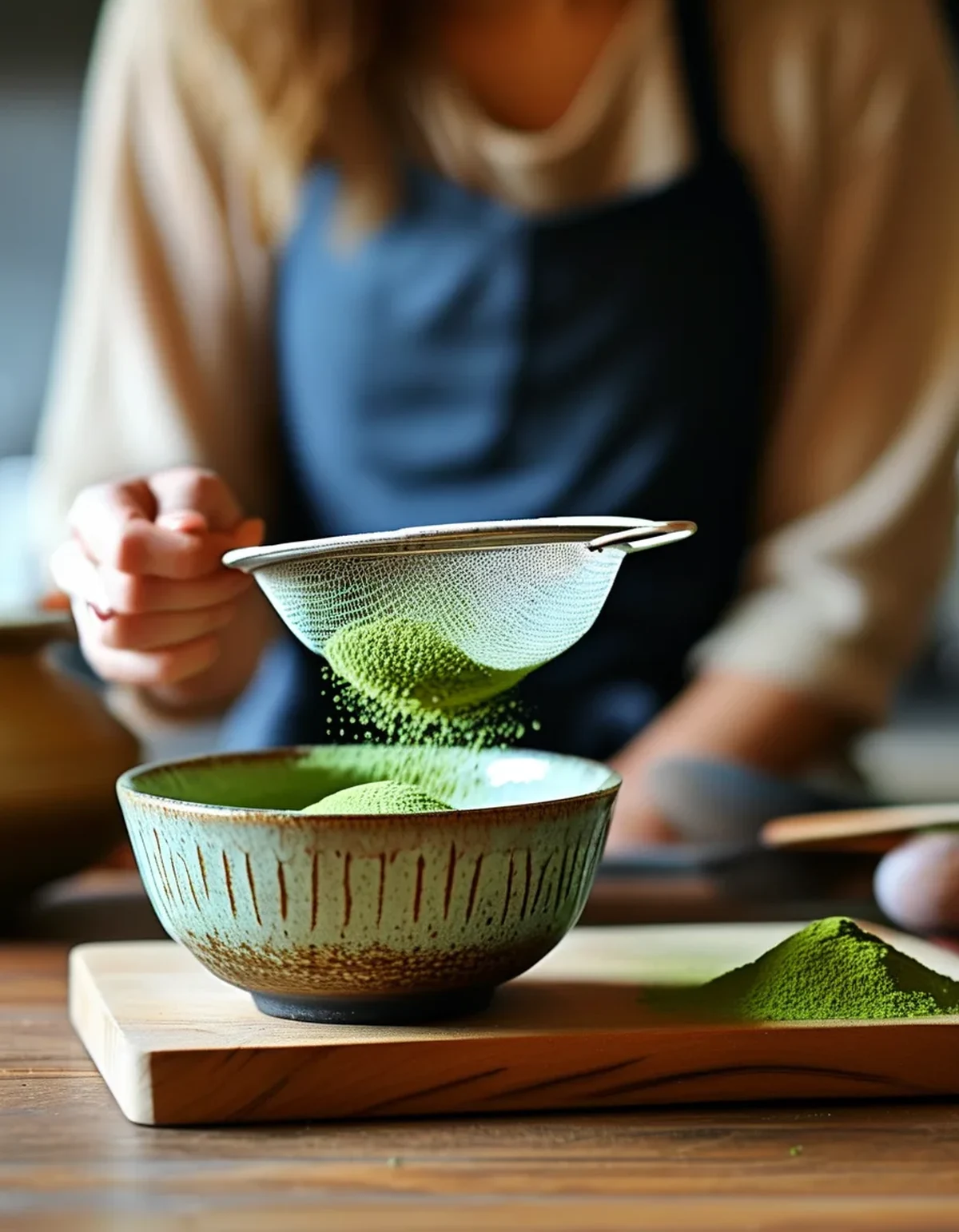
Sifting breaks clumps that already exist. Pressing powder through a fine mesh mechanically separates aggregates. If your tin has been open for weeks, this makes a visible difference and takes 15 seconds.
Sifting does not prevent new clumps. The moment sifted powder hits the bowl it starts re-aggregating, and the moment it meets water the surface tension pulls particles together again. Sifting is a starting condition, not a protection.
A fine mesh strainer works as well as a dedicated sifter. The specialized tools are pleasant to use and no more effective. Use whatever you own with a mesh fine enough that the powder needs help going through.
Skip sifting entirely if the matcha is fresh and you use the paste method. With a tin opened in the last week or two, the paste step alone handles it.
The honest ranking: paste method first, storage second, sifting third. Most people do these in exactly the reverse order.
What Nobody Tells You About the First Ten Seconds
The clumping is decided before you start whisking properly.
Pouring all the water at once is the actual mistake. Dumping 60 to 70ml of hot water onto dry powder floods it. The outer surface of each clump wets instantly, forming a skin that keeps water out of the center. Those cores never dissolve, and no whisking speed fixes a sealed clump.
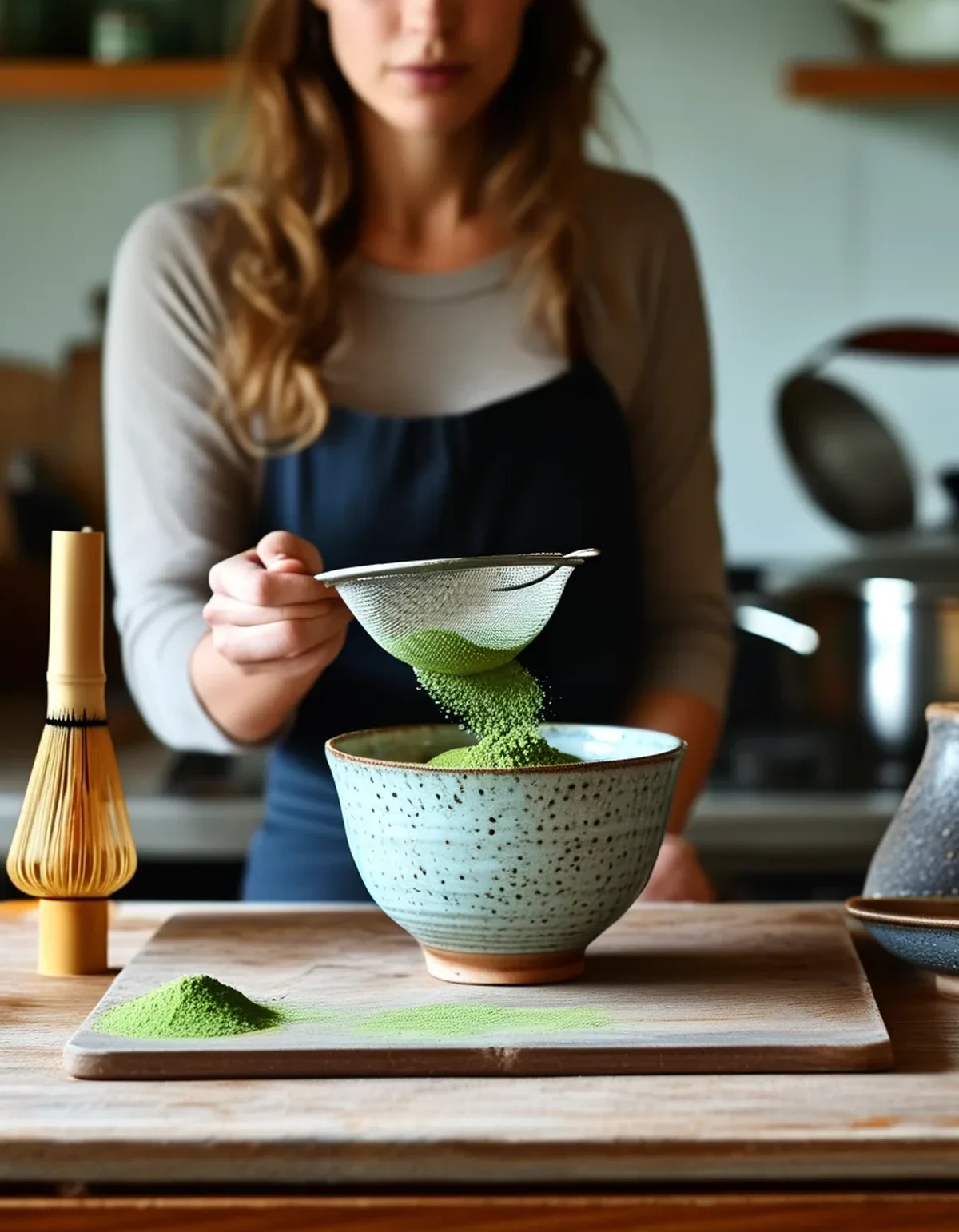
The paste step solves it. Add about a teaspoon of water — barely enough to wet the powder — and work it into a smooth, glossy paste against the side of the bowl with the whisk. Ten seconds. Every particle gets wet at low water volume, so nothing can seal.
Then add the rest and whisk normally. The W or M motion from the wrist, briskly, about 15 to 20 seconds until foam forms.
Water temperature matters less than order. 175°F/80°C is the usual recommendation and it does improve flavor, but boiling water added as a paste still produces a smoother bowl than perfect-temperature water dumped all at once.
And the whisk should not touch the bottom. Scraping the base of the bowl slows the whisk and pushes powder into the corners where it stays. Keep the tines just above the surface of the bowl.
How should you store matcha so it clumps less?
Storage is the variable people underuse and it costs nothing.
Airtight, opaque, and small. Every time you open a large tin you let in humid air that stays. Decanting into a smaller container as the tin empties reduces headspace and slows moisture uptake.
The refrigerator is conditional. Cold storage slows oxidation but creates a condensation problem: powder taken from the fridge pulls moisture out of warm room air the moment it is opened. If you refrigerate, let the sealed container come to room temperature before opening — 20 to 30 minutes.
Never store it near the stove or a window. Heat and light degrade the chlorophyll that makes matcha green and the amino acids that make it taste sweet rather than bitter.
Use a dry scoop every time. A bamboo chashaku that touched wet powder yesterday introduces moisture directly into the tin. Wipe it, or keep one scoop dry for the tin and use something else for the bowl.
Seasonal note: as summer humidity gives way to drier fall air, clumping shifts from moisture-driven to static-driven. The tin that clumped in August may clump for a completely different reason in October — and static clumps break apart easily, while moisture clumps do not.
FAQ: Matcha Clumping Questions, Answered
Is clumping a sign of low-quality matcha?
Not by itself. Ceremonial-grade matcha is ground finer than culinary grade, which actually makes it more prone to static clumping, not less. What does signal quality is how the clumps behave — good matcha clumps break apart into fine powder with light pressure, while poor or stale matcha forms hard aggregates that resist the sieve.
Can I use a milk frother instead of a whisk?
Yes, and it handles clumping well because the high speed shears aggregates apart. The trade-off is foam texture — a frother produces large, unstable bubbles compared to the fine dense foam a bamboo whisk creates. For a latte it makes no practical difference. For a straight bowl of usucha, the whisk is worth the 20 seconds.
Why does my matcha clump only sometimes with the same tin?
Almost always humidity on the day, or a scoop that was slightly damp. Track it for a week and you will usually find the clumpy days are the humid ones, or the days you made a second bowl right after washing the scoop. Both have easy fixes and neither means the matcha turned.
TL;DR:
- Matcha clumps from static, absorbed moisture, and its extremely fine particle size — not from being low quality.
- Sifting breaks existing clumps but prevents nothing; it is the third-most useful fix, not the first.
- Make a paste with a teaspoon of water first, then thin it — this stops clumps from sealing and solves most of the problem.
- Store airtight and small, keep the scoop dry, and let refrigerated matcha warm up before opening. If you change one thing this week, change the order in which the water goes in. It costs ten extra seconds and it does more for the bowl than any tool you could buy.
Keep Reading
This article is for general informational purposes only and is not medical advice. Always consult a qualified health professional for guidance specific to you.