Matcha vs. Coffee Before a Workout: Which One Actually Performs Better?
Quick Answer: Matcha and coffee both deliver real caffeine-driven energy, but matcha’s L-theanine content tends to produce a steadier, less jittery energy curve with a slower crash, while coffee delivers a faster, more intense caffeine spike better suited to short, high-intensity efforts where an immediate jolt matters more than sustained steadiness.
The ‘matcha is just gentler coffee’ framing undersells what’s actually a genuinely different energy profile, not just a weaker version of the same thing.

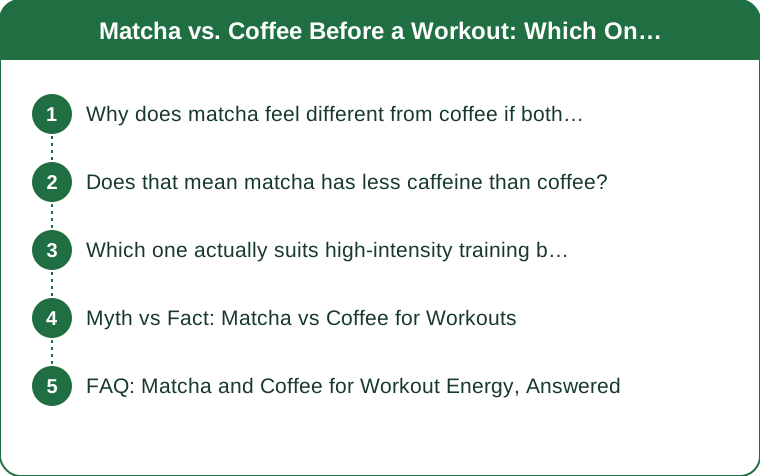
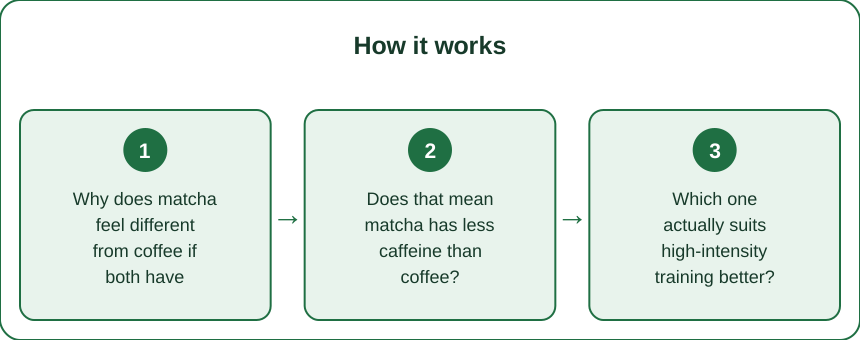
Why does matcha feel different from coffee if both have caffeine?
Matcha contains L-theanine, an amino acid that moderates caffeine’s stimulating effect on the nervous system, producing steadier alertness without the same sharp peak and crash pattern coffee often creates. Coffee typically lacks this counterbalancing compound in meaningful amounts.
Does that mean matcha has less caffeine than coffee?
Not necessarily less, just experienced differently — a standard matcha serving has roughly 70-80mg of caffeine, brewed coffee generally around 95-100mg. The gap is real but modest; the bigger difference is the L-theanine-moderated experience, not a dramatically lower dose.

Which one actually suits high-intensity training better?
Coffee’s faster, more intense caffeine delivery tends to suit short, maximal-effort sessions (heavy lifting, sprints) where an immediate jolt translates directly to output. Matcha’s steadier curve tends to suit longer, sustained-effort sessions (longer runs, extended training blocks) where avoiding a mid-session crash matters more.
Myth vs Fact: Matcha vs Coffee for Workouts
Myth: Matcha has basically no caffeine compared to coffee. Fact: The gap is real but modest — matcha still delivers a meaningful caffeine dose, just paired with L-theanine’s moderating effect.
Myth: Coffee always causes a workout crash and matcha never does. Fact: Individual caffeine sensitivity varies enough that some people handle coffee’s curve just fine — this is a tendency, not an absolute rule.
Myth: You should switch entirely to matcha for all your workouts. Fact: Matching the caffeine source to the workout type (coffee for short/max-effort, matcha for longer/sustained) generally outperforms picking one exclusively.
FAQ: Matcha and Coffee for Workout Energy, Answered
How long before a workout should I have matcha or coffee?
Roughly 30-45 minutes before training allows caffeine to reach effective blood levels for either option.
Can I combine matcha and coffee for a stronger effect?
Some people do, but this significantly raises total caffeine intake — worth tracking total daily caffeine if combining regularly.
Is one option better for evening workouts given caffeine and sleep?
Both carry the same sleep-disruption caffeine risk for evening sessions; a lower-caffeine or caffeine-free pre-workout option is generally safer within a few hours of bedtime.
TL;DR:
- Both matcha and coffee deliver real caffeine, just with different absorption curves
- L-theanine in matcha moderates the spike, producing steadier energy with less crash
- Coffee suits short, max-effort sessions better; matcha suits longer, sustained efforts
- Matching the source to the workout type beats picking one exclusively
The better choice isn’t matcha or coffee universally — it’s whichever curve matches the effort you’re about to put in.
Keep Reading
This article is for general informational purposes only and is not medical advice. Always consult a qualified health professional for guidance specific to you.