Your Matcha Scoop Is the Real Caffeine Variable, Not the Grade
Quick Answer: A level bamboo scoop (chashaku) holds roughly 1 gram of matcha, about 25-35 mg of caffeine. Two scoops is the standard serving, so 50-70 mg. Grade shifts caffeine by maybe 10 percent; your scoop size shifts it by 100 percent.
You switched to ceremonial grade and swore the jitters got worse. Then you switched back and they stayed. Somewhere in there you also started using the kitchen teaspoon instead of the little bamboo paddle. That is the whole story, and nobody sells a fix for it because the fix is free.

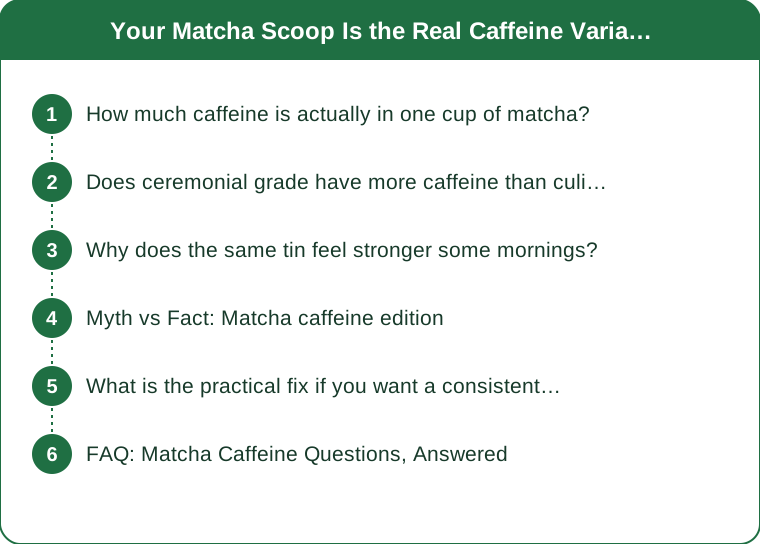
How much caffeine is actually in one cup of matcha?
A standard serving is 2 grams of powder whisked into 60-70 ml of hot water. That lands between 50 and 70 mg of caffeine, roughly two-thirds of a drip coffee.
The range exists because matcha caffeine runs 25-35 mg per gram depending on harvest and shading. That is a real spread, but it is small compared to what happens at your counter.
A level chashaku holds about 1 gram. A level kitchen teaspoon holds 2 to 2.4 grams of matcha, because matcha is fine and packs densely. Scoop twice with a teaspoon out of habit and you just drank a 4.5 gram serving. That is 110-150 mg, coffee territory, and you never changed a thing about the powder.
Does ceremonial grade have more caffeine than culinary?
Slightly, and not reliably. First-harvest leaves grown under heavier shade tend to carry a bit more caffeine and considerably more L-theanine. Call it a 10 to 15 percent difference at the top end.
What you actually notice when you switch grades is usually the L-theanine ratio, not caffeine. L-theanine is the amino acid that smooths the caffeine curve. Higher-shade ceremonial matcha carries more of it, which is why the same caffeine load can feel calmer.
So the paradox resolves: better matcha can contain more caffeine and still feel less jittery. Grade changes the texture of the buzz. Scoop size changes the size of it.
Why does the same tin feel stronger some mornings?
Matcha settles. Powder that has sat in a tin for a week compacts at the bottom, so a scoop from the bottom third weighs meaningfully more than a scoop from the top.
That is why the last two weeks of a tin often feel stronger than the first two. Sift or shake before scooping and the difference mostly disappears.
Water temperature plays too. Water at 175F pulls caffeine efficiently; water near boiling pulls it faster and drags out more catechins, which is also where the harsh edge comes from. If your morning cup is inconsistent, temperature and settling explain more of it than the tin ever will.

Myth vs Fact: Matcha caffeine edition
Myth: Matcha releases caffeine slowly. Fact: caffeine absorption is caffeine absorption. What differs is L-theanine blunting the peak subjectively. Blood levels still peak around 45-60 minutes.
Myth: You cannot overdo matcha. Fact: three generous teaspoon servings is 300+ mg, and matcha drinkers often sip through the afternoon in a way they never would with espresso.
Myth: Whisking longer makes it stronger. Fact: whisking changes foam and suspension, not extraction. A thick froth just holds more powder in suspension so you actually swallow what you measured.
Myth: Cold matcha has less caffeine. Fact: same powder, same caffeine. Cold water extracts fewer bitter catechins, so it tastes milder and you drink it faster.
What is the practical fix if you want a consistent cup?
Weigh it once. Put your usual scoop on a kitchen scale and find out what you have actually been drinking. Most people are surprised by 50 percent or more.
Then pick a target and hit it with the same tool every day:
- Gentle: 1.5 g, about 40-50 mg caffeine
- Standard: 2 g, about 50-70 mg
- Strong: 3 g, about 75-105 mg
Use the bamboo scoop, sift before whisking, and keep water at 170-180F. Three habits, no new purchases, and your afternoon stops being a coin flip.
FAQ: Matcha Caffeine Questions, Answered
Is matcha better than coffee for anxiety?
For many people yes, because L-theanine at roughly a 1:2 ratio with caffeine reduces the sharp arousal spike. It is not a cure for anxiety, and a 4 gram serving will still make you feel wired.
How late can I drink matcha?
Caffeine has a half-life around 5 hours. A 2 gram cup at 3 pm still has about 30 mg circulating at 8 pm. If you are sleep-sensitive, cut it off after lunch.
Does adding milk change caffeine?
No. Milk changes absorption speed slightly and softens bitterness, but every milligram you scooped is still in the cup.
TL;DR:
- One chashaku scoop is about 1 g; one kitchen teaspoon is 2-2.4 g of matcha
- A standard 2 g serving delivers 50-70 mg caffeine, roughly two-thirds of drip coffee
- Grade shifts caffeine by 10-15 percent; scoop size can double it
- Sift before scooping so the bottom of the tin does not sneak up on you
Weigh your usual scoop one time on a kitchen scale. That single 30-second experiment tells you more about your morning than any amount of grade-shopping, and it costs nothing. Once you know your real number, you can dial it up or down on purpose instead of guessing why Tuesday felt different from Thursday.
Keep Reading
This article is for general informational purposes only and is not medical advice. Always consult a qualified health professional for guidance specific to you.