How to Tell If Your Matcha Is Actually Good — a 60-Second Home Test
Quick Answer: Whisk a small amount with 70°C water and taste it plain. Good ceremonial matcha tastes naturally sweet and grassy with a smooth finish; low-grade matcha tastes sharply bitter and leaves grit on your tongue no matter how well you whisk it.
You followed every whisking tutorial and your matcha still tastes like bitter lawn clippings. Before you buy a $40 bamboo whisk to fix it, it’s worth ruling out the simpler explanation: the powder itself.

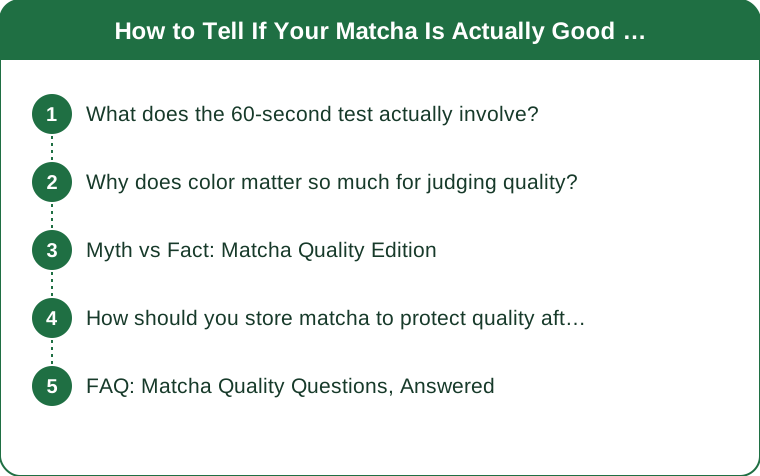
What does the 60-second test actually involve?
Whisk 1/2 teaspoon of matcha with 2 oz of 70°C water (not boiling — that scorches it) in a zigzag motion for 15 seconds. Taste it completely plain, no sweetener.
Good matcha: naturally sweet upfront, grassy-vegetal, smooth texture, bitterness fades quickly. Low-grade matcha: bitter hits immediately and lingers, texture feels gritty rather than silky, color leans dull olive instead of vibrant jade.
Why does color matter so much for judging quality?
Color is one of the most reliable quality signals because it directly reflects chlorophyll and shading during growth. Vibrant, almost neon jade-green powder comes from shade-grown leaves harvested young — that’s ceremonial grade.
A dull, yellowish, or brownish-green tint usually means older leaves, less shading, or oxidation from poor storage — even if the label says ‘ceremonial.’

Myth vs Fact: Matcha Quality Edition
Myth: All matcha is naturally bitter — that’s just how it tastes. Fact: Genuine bitterness that overwhelms the grassy-sweet notes is a quality issue, not a category trait. Good matcha has bitterness in balance, not in charge.
Myth: A more expensive whisking tool fixes bitter matcha. Fact: Technique affects texture (foaminess, clumping) but can’t fix flavor that’s baked into low-grade leaves.
Myth: Culinary-grade matcha is just a cheaper version of ceremonial. Fact: They’re grown and processed differently on purpose — culinary grade is meant to be bolder and more bitter so it holds up in lattes and baking, not a failed ceremonial batch.
How should you store matcha to protect quality after opening?
Matcha oxidizes fast once opened — airtight, refrigerated, used within 4-6 weeks is the standard that actually preserves both color and flavor. Room-temperature storage in a cabinet will dull good matcha within weeks, no test needed to notice.
If your matcha passed the taste test fresh but has gone duller and more bitter over time, storage — not the original quality — is usually the culprit.
FAQ: Matcha Quality Questions, Answered
Does price always indicate matcha quality?
Mostly, but not perfectly — origin, shading time, and harvest matter more than price alone. Use the taste-and-color test rather than trusting price as a shortcut.
Can old matcha make you feel jittery in a bad way?
Oxidized matcha can taste harsher, which sometimes gets mistaken for a caffeine reaction, but the caffeine content itself doesn’t spike with age.
Is clumpy matcha automatically low quality?
Not necessarily — clumping is often just humidity or insufficient sifting, unrelated to grade. Sift before whisking rather than assuming the powder is bad.
TL;DR:
- Test plain: good matcha tastes sweet-grassy with a smooth finish, low-grade tastes sharply bitter and gritty
- Vibrant jade color is a reliable quality signal; dull olive usually means lower grade or age
- Culinary grade is bitter on purpose for cooking — it’s not failed ceremonial matcha
- Store airtight and refrigerated, use within 4-6 weeks, or good matcha will taste like bad matcha
Run the plain taste test before you blame your technique — it takes less time than watching another whisking tutorial.
Keep Reading
This article is for general informational purposes only and is not medical advice. Always consult a qualified health professional for guidance specific to you.